

|
NGC 40 This project originated from a suggestion by Yves Grosdidier, a professor at the University of Sherbrooke, who spoke about this remarkable star during one of his lectures in the spring of 2017. Subsequently, monitoring began in June 2017 and has continued annually since then. The goal is to study possible changes in turbulence using Narrowband filters: HA, OIII, SII, V (for photometry), and CV (Clear). NGC 40, or Caldwell 2, also known as the "Tie Knot Nebula," is classified as a planetary nebula. However, its core contains a Wolf-Rayet star that is nearing the end of its life. This type of star is characterized by the material it releases due to its high temperature and velocity, as well as its effervescent activity. The identification of the predominant gases around the star is already remarkable thanks to the "NarrowBand" filters and arouses curiosity.
Crédit: WIYN / NOIRLab / NSF |
OMSJ 2017 According to the method of: |
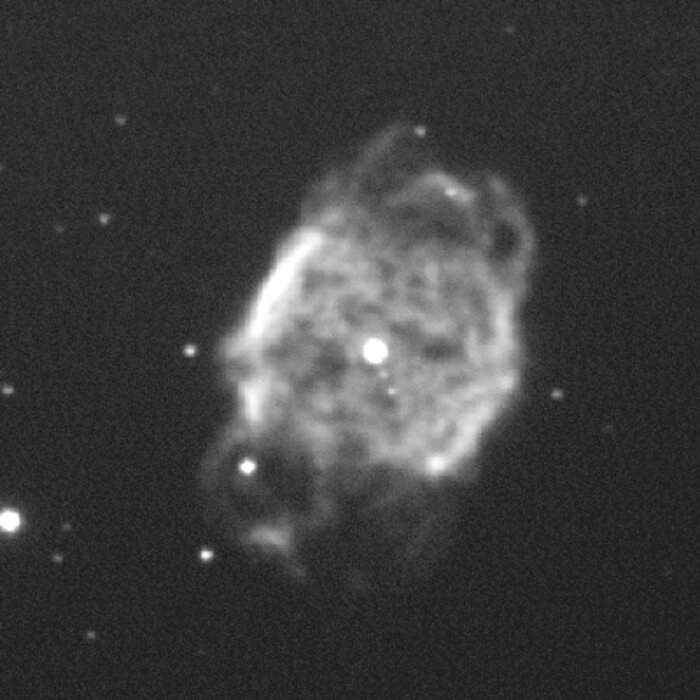
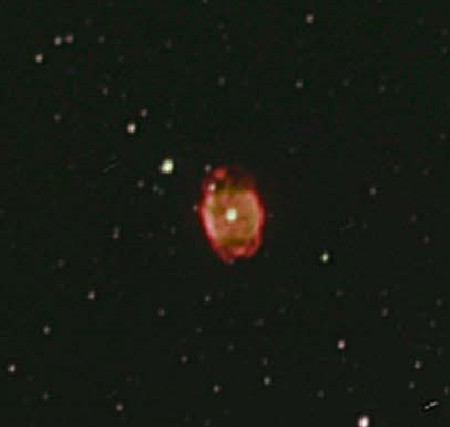
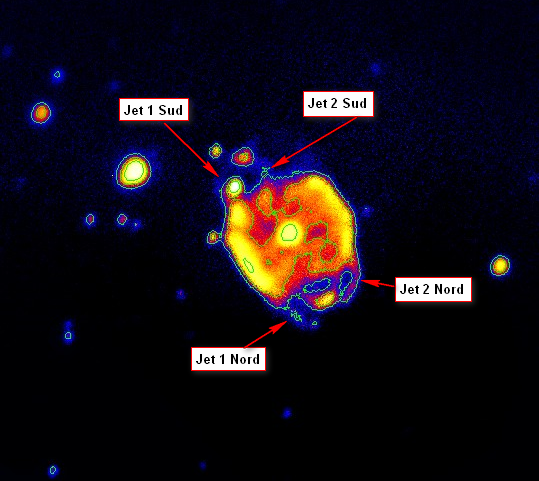
2017-06-26 - OMSJ 2017-07-06 OMSJ 2017-11-07 OMSJ
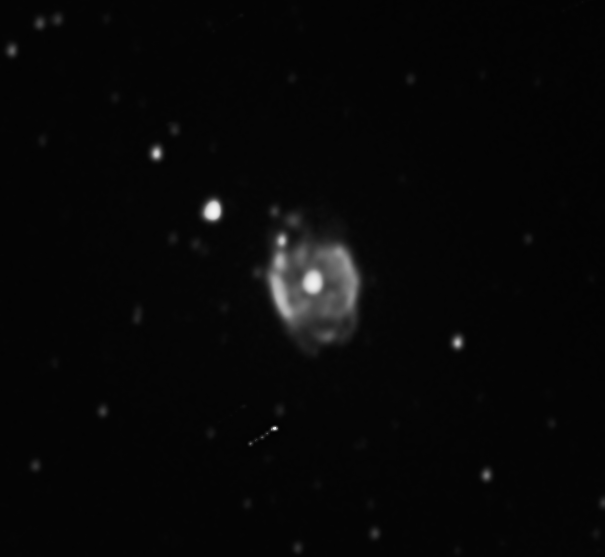
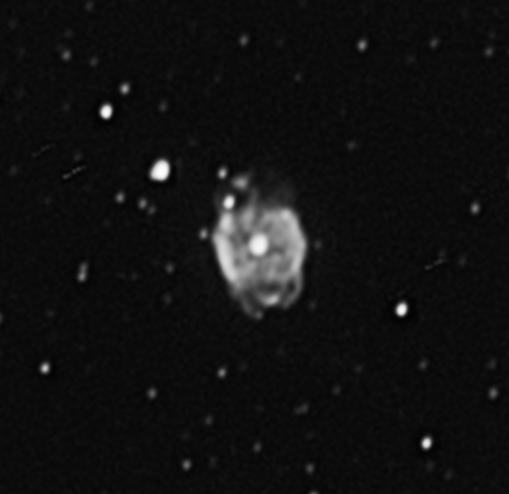
Filtre Clair (UV)
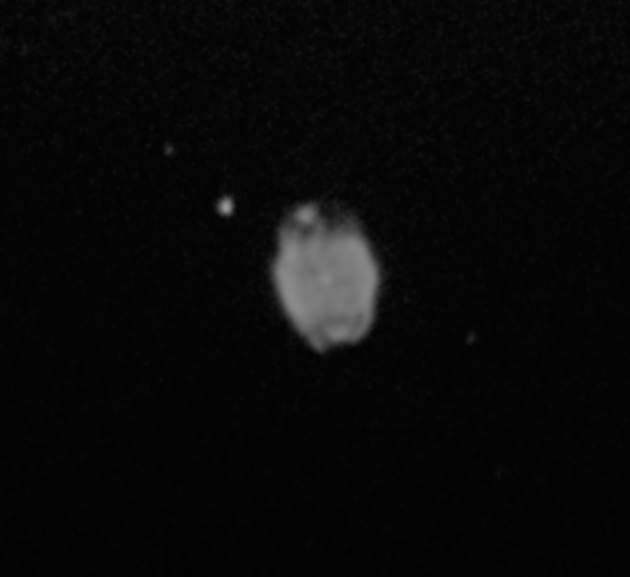
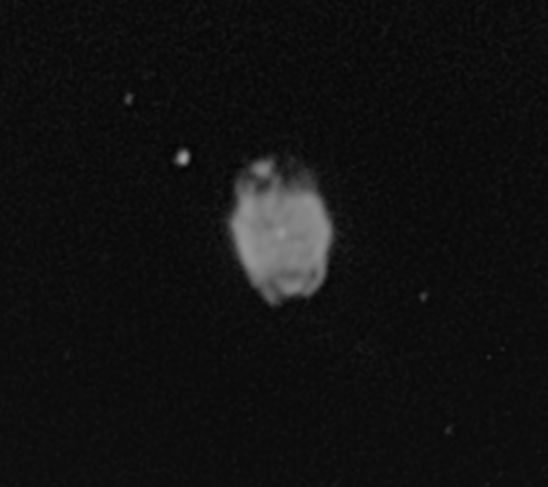
Filtre H-Alpha
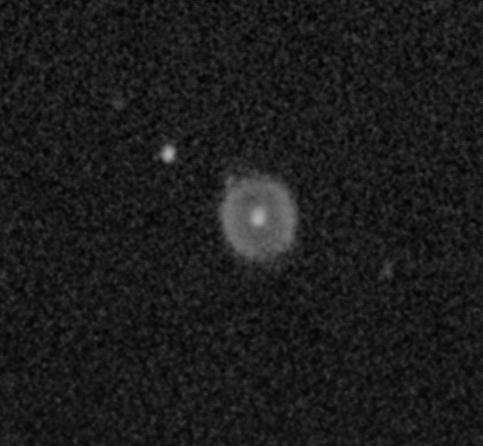
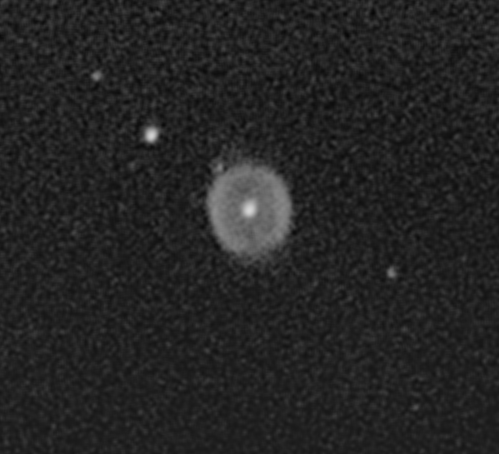
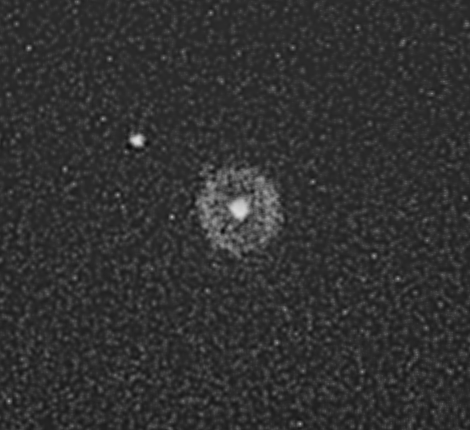
Filtre OIII 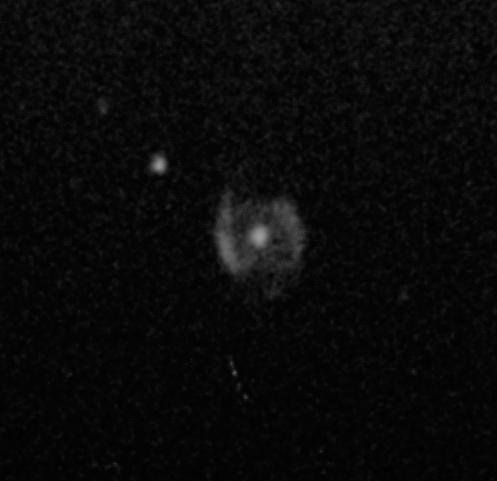
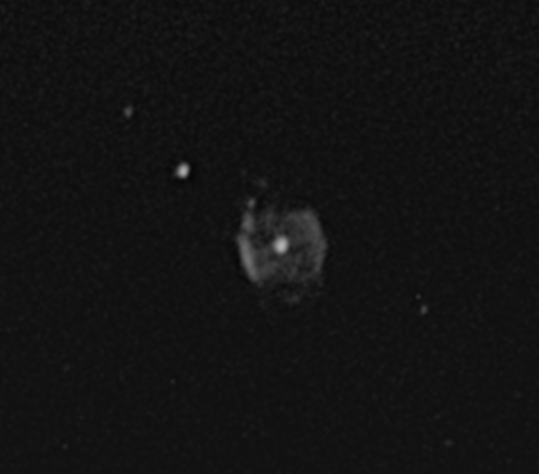
Filtre SII
MAJ 2020:
New images obtained with the new OMSJ telescope and Atik 414ex camera- 2020-09-05:
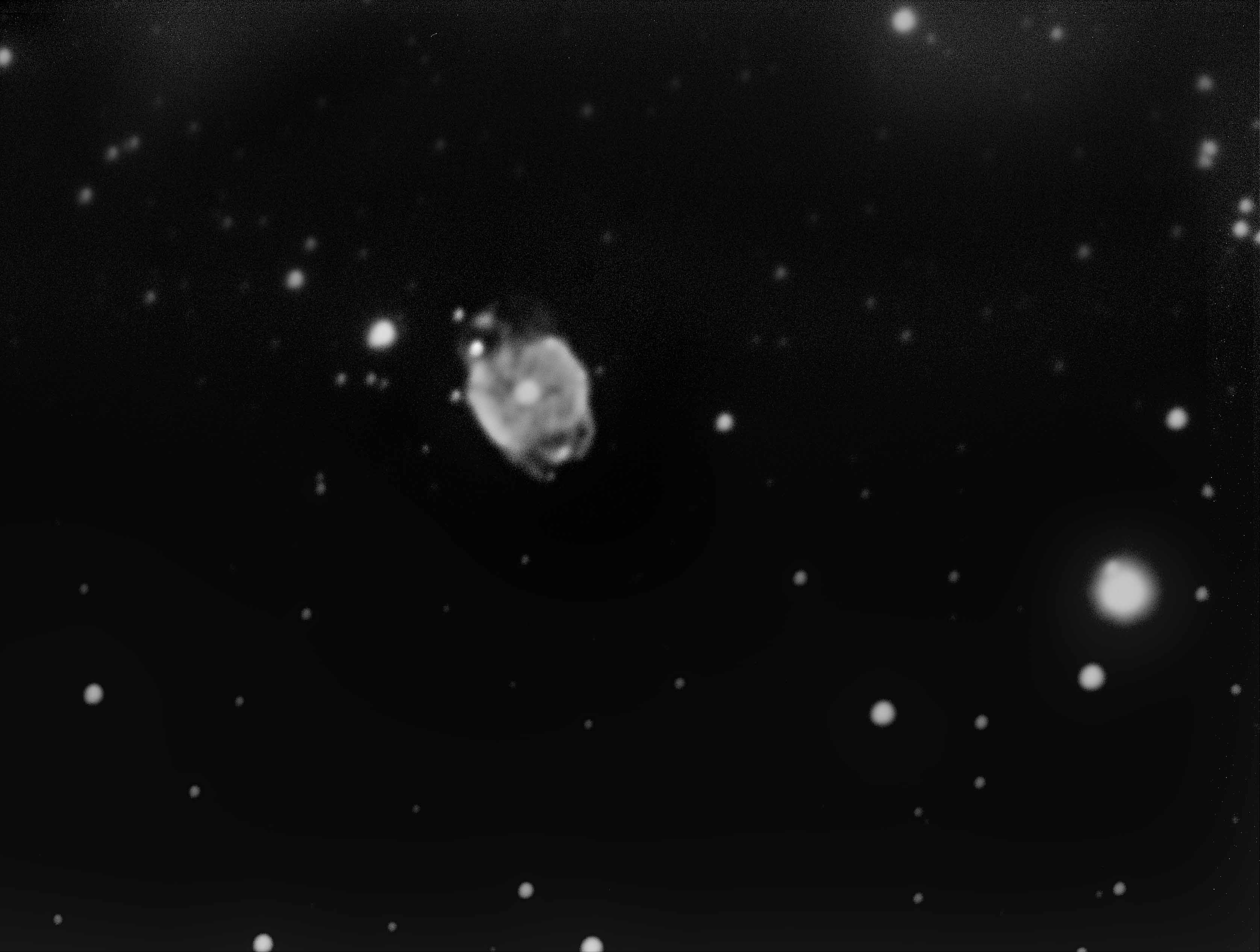
Chromatic analysis of greys:
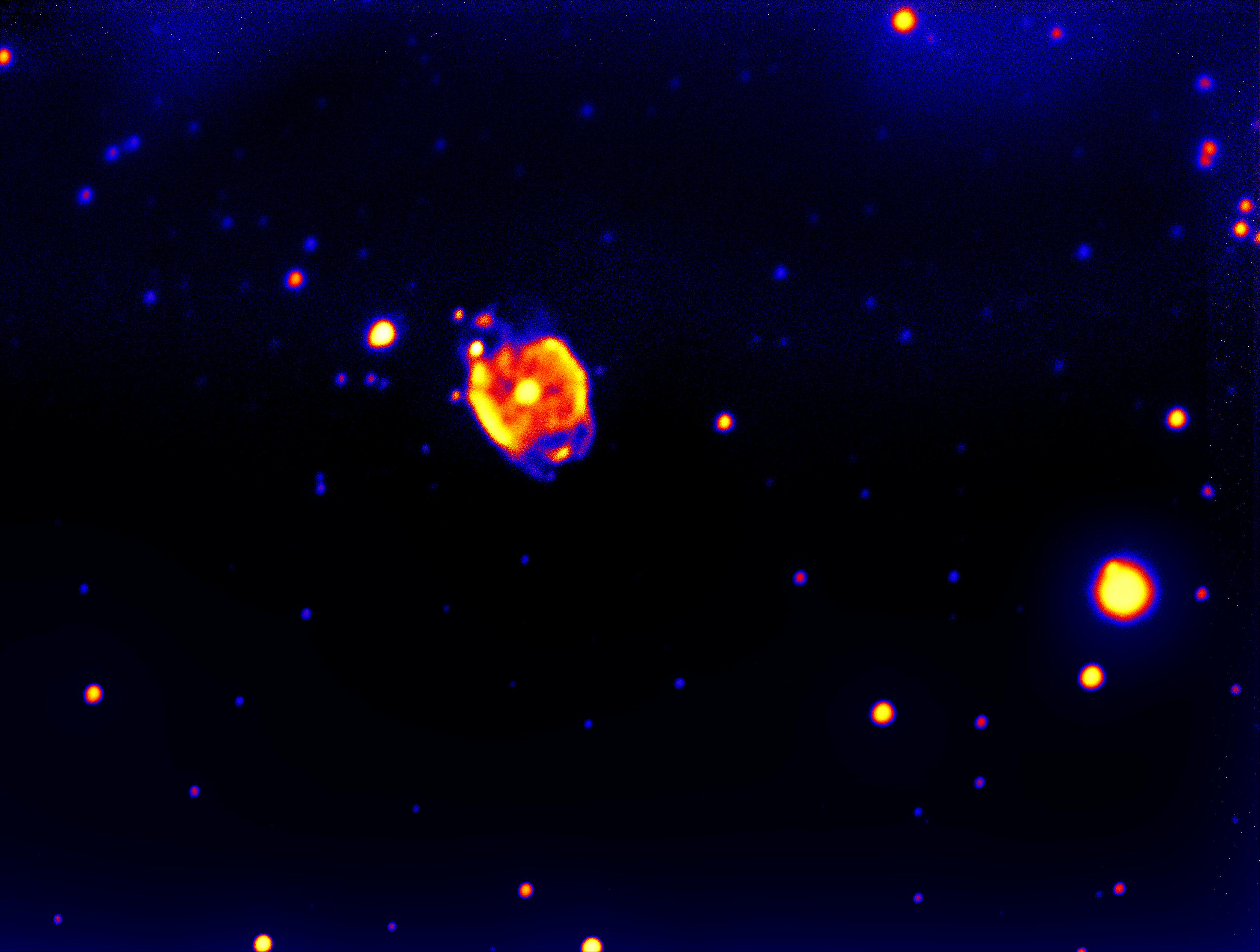
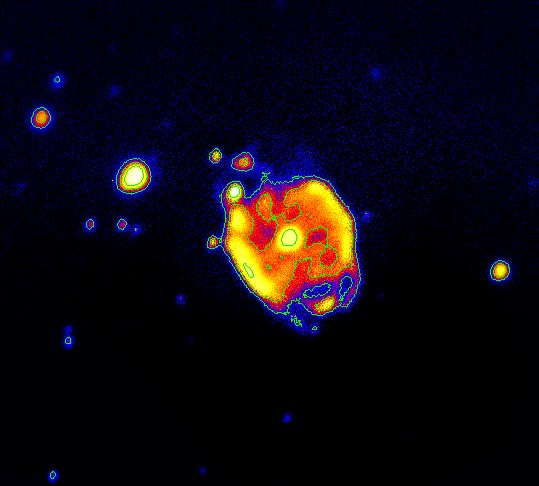
Central star and nebula
https://iopscience.iop.org/article/10.1088/0004-637X/738/2/174/pdf
https://www.aanda.org/articles/aa/abs/2003/10/aah4002/aah4002.html
https://arxiv.org/abs/1010.4833
https://arxiv.org/abs/1902.11219
http://adsabs.harvard.edu/full/2000A%26A...355..688S
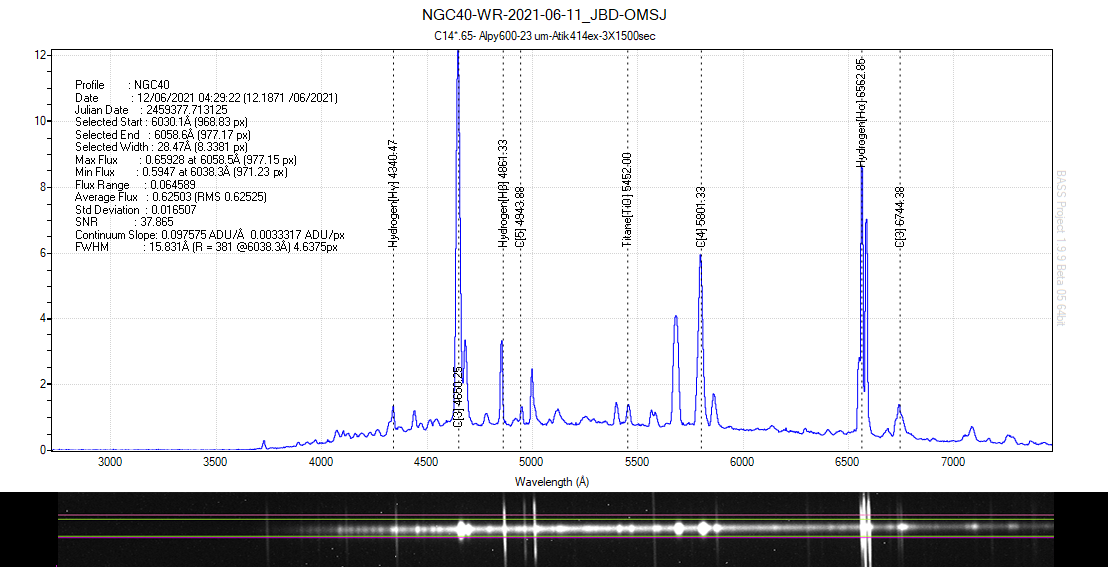
Spectroscopy of NGC40: https://www.britastro.org/node/12422
http://articles.adsabs.harvard.edu/pdf/2010JBAA..120..378B
https://arxiv.org/abs/1902.11219
JBD- 2022