|
The Observatory
Located on Mount St. Joseph, the OMSJ (Mount St. Joseph Observatory) benefits from exceptional darkness, as the mountain blocks light pollution from the west and the trees block it from the northeast (Lac-Mégantic). Furthermore, its altitude of 610 meters makes it an ideal location for observations under one of the most beautiful skies in the Mont-Mégantic International Dark Sky Reserve. With the wind typically blowing from the west-southwest, the humidity is blocked by the mountain's summit, resulting in drier and more stable descending air due to adiabatic compression.
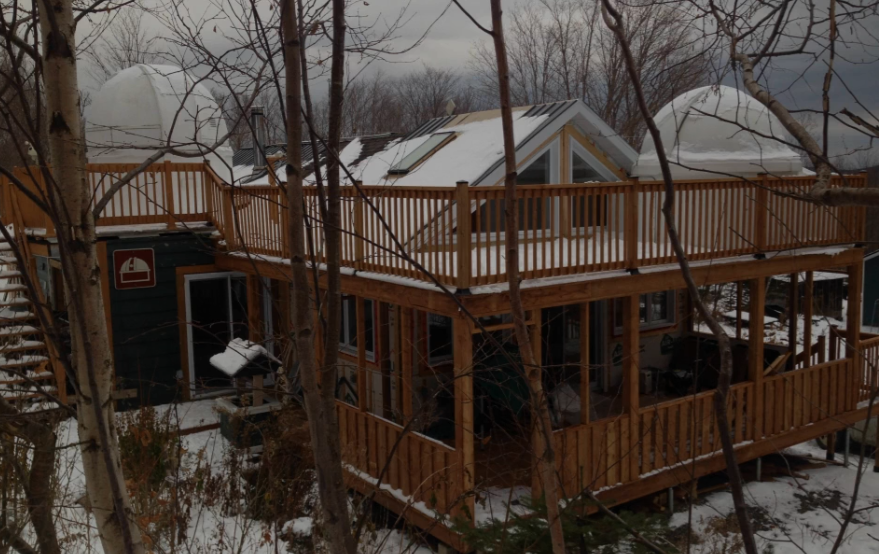
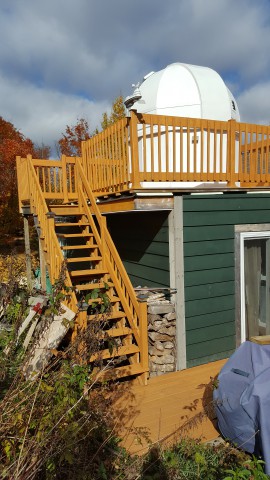
The wooden dome, now covered with fiberglass, protects against the legendary winds of Mount St. Joseph. In addition, it provides an effective barrier against dew.
Equipements Currently, the OMSJ is primarily dedicated to the pleasures of observation, but also to supporting PRO/AM monitoring such as photometry and spectroscopy. These two types of observations can be applied to all areas of PRO/AM monitoring, such as variable stars, cataclysmic stars, supernova, etc.. The observatory's main field of observation is stars, our raw material. They are merely balls of incandescent gas, but there are so many phases these stars go through between their birth and death, depending on their mass, temperature, and other factors.
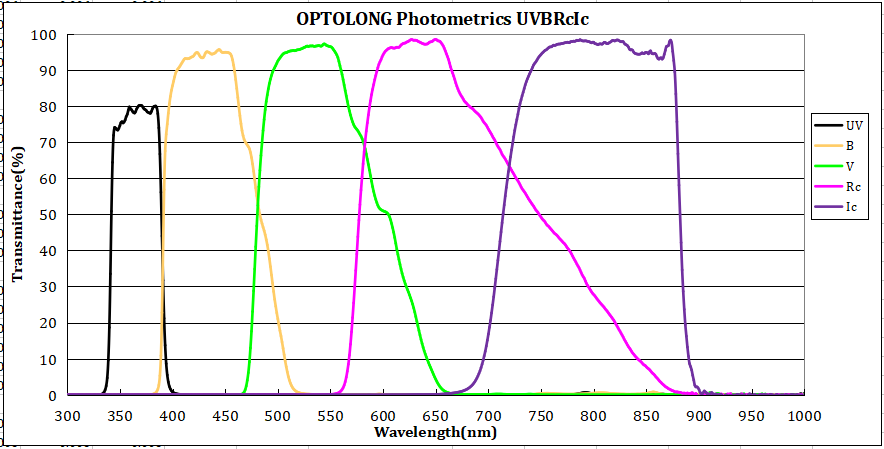
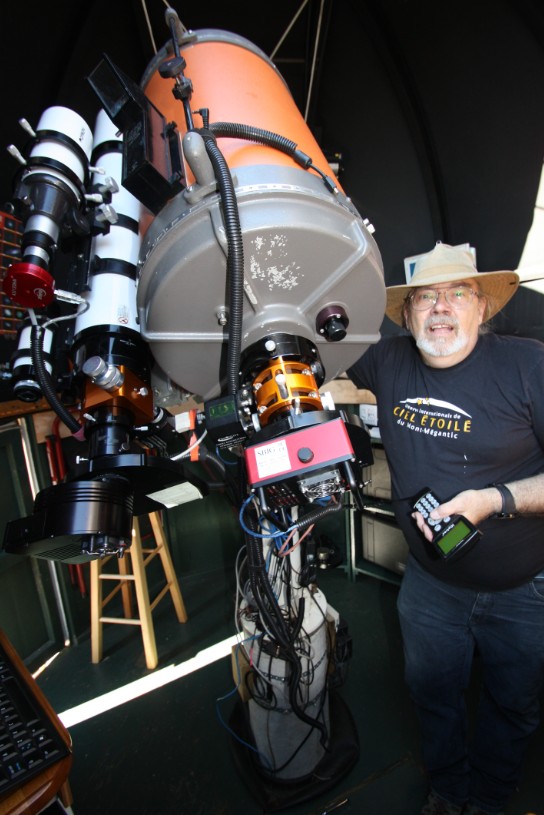
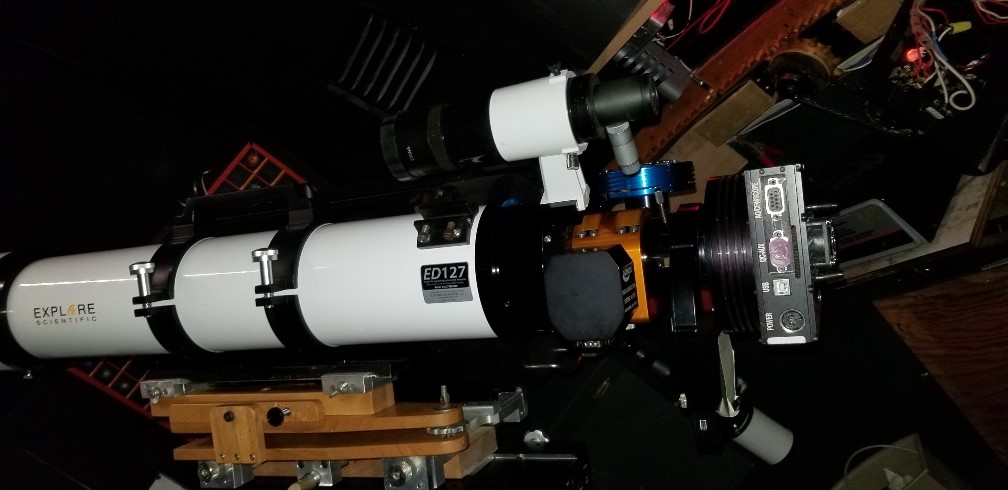
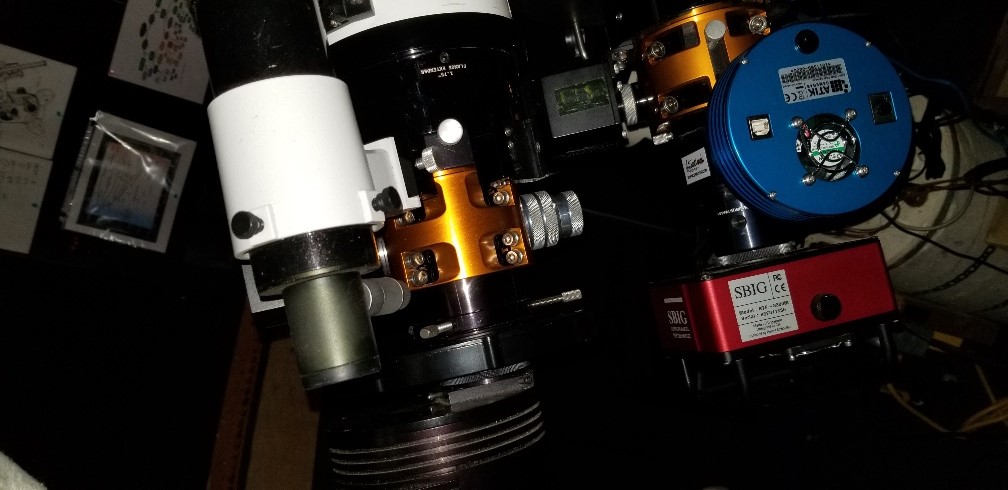
Mount: - The dome is primarily equipped with a C14 (355mm) telescope, fitted with a Moonlite focuser. In photometry mode, it uses a Moravian G3 16200 camera with Optolong (U, B, V, Rc) and Ic filters. A second observatory camera (ASI2600MM) is also used for astrophotography, with LRGB filters as well as Narrowband HA, OIII, and SII filters. The C14 is also frequently used in spectroscopic mode... - High resolution is also provided by a StarEx with a 2400 grating (R=15,000) - In parallel, an Explore Scientific 127mm telescope (Air-Spaced Triplet Refractor APO) is used, generally equipped with an SBig ST-8 XME for tracking variables with Optolong, CV, U, V, B, R, and Ic filters for special tracking in both observation modes (Photometry and Spectroscopy).
In addition, the dome is synchronized with the telescope and can therefore track these targets every night without supervision, and the observatory can be remotely controlled after opening. |
(C'est pas ma meilleur photo, mais...bon!)
|
|---|

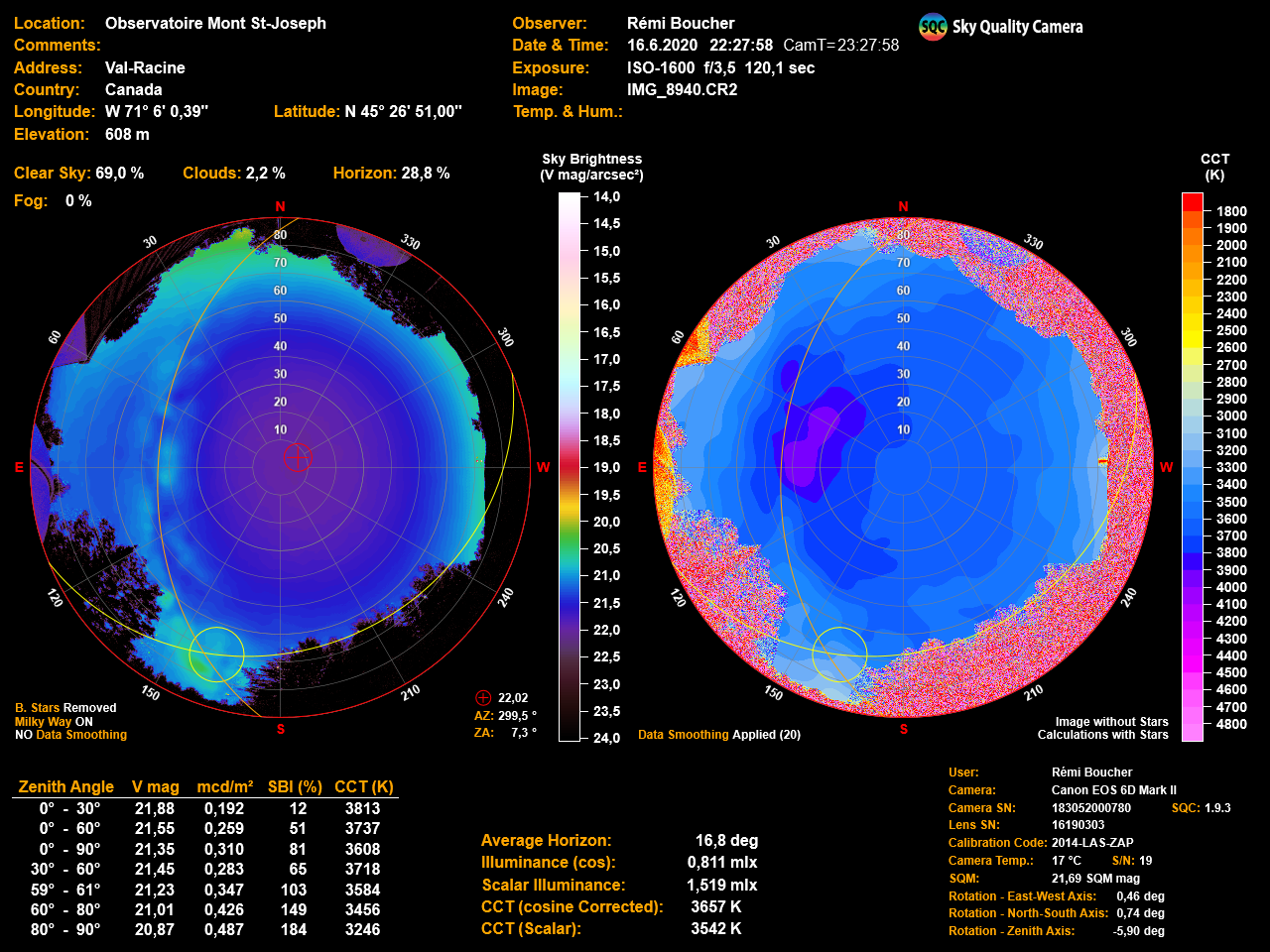
The foundation... is first and foremost the quality of the observatory's sky:
Sky Analysis Report - August 2020